Newsletter Subscribe
Enter your email address below and subscribe to our newsletter
Enter your email address below and subscribe to our newsletter

 ByJohn A
The air inside your home may appear clean, but your HVAC system could be circulating contaminants that are invisible to the naked eye. Every time your heating or cooling system operates, air travels through a network of ducts that can collect dust, allergens, pet dander, mold spores, and other pollutants over time. These hidden contaminants may affect indoor air quality, reduce HVAC efficiency, and contribute to unpleasant odors. Investing in Air Duct Cleaning Boston services is an effective way to remove these hidden pollutants, helping your home maintain cleaner air and supporting a healthier indoor environment.
An air duct system serves as the pathway that distributes heated and cooled air throughout your home or business. The ductwork connects your HVAC unit to vents located in different rooms, allowing conditioned air to circulate efficiently.
As air continuously moves through these ducts, it carries tiny particles from both indoor and outdoor environments. Although HVAC filters capture many contaminants, they cannot stop every particle from entering the duct system. Over time, these particles settle along the interior surfaces of the ducts and gradually accumulate.
Hidden contaminants are pollutants that build up inside the ductwork without being visible during normal daily activities. Because they remain concealed within the HVAC system, many property owners are unaware of their presence until they begin affecting indoor comfort or air quality.
These contaminants can remain inside the duct system for months or even years if professional cleaning is never performed.
Dust is one of the most common contaminants found inside air ducts. It consists of tiny particles made up of soil, fabric fibers, skin cells, pollen, and other airborne debris.
Every time the HVAC system operates, some of this dust can circulate back into your living space.
Homes with pets naturally accumulate fur and microscopic skin flakes known as dander.
Even with regular vacuuming, some pet-related particles enter the return air vents and settle inside the ductwork, where they continue circulating throughout the home.
Outdoor pollen frequently enters homes through open doors, windows, clothing, and shoes.
Once inside, it can travel through the HVAC system and collect within the ducts, especially during allergy seasons.
Moisture inside ductwork creates an environment where mold may develop.
If mold begins growing inside the HVAC system, spores can spread throughout the property whenever the system operates.
Warm, humid conditions can support the growth of certain bacteria and microorganisms within HVAC components.
Although not every HVAC system develops microbial contamination, poor maintenance increases the risk.
In some cases, insects or rodents may enter damaged ductwork.
Their nesting materials, droppings, and other debris can contaminate the air moving through the system while creating unpleasant odors.
Contaminant buildup is usually gradual.
Small particles enter the HVAC system every day through return vents. As air slows inside sections of the ductwork, heavier particles settle onto interior surfaces.
Over months and years, these layers become thicker, especially if filters are not replaced regularly or maintenance has been neglected.
The longer contaminants remain inside the system, the greater the likelihood that they will continue circulating throughout the building.
See also: SSD Destruction Services: Why Secure SSD Disposal Matters More Than Ever
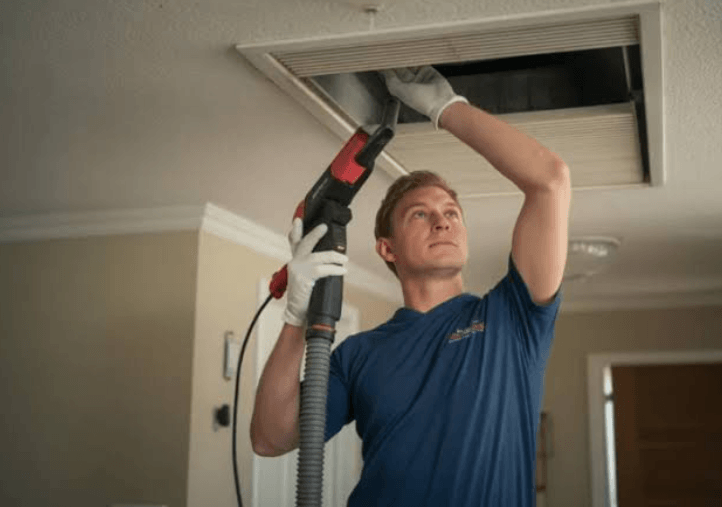
Professional air duct cleaning is a detailed process designed to remove accumulated debris without damaging the HVAC system.
Unlike basic household cleaning, professional equipment reaches deep into the duct network to remove contaminants that ordinary tools cannot access.
The process usually begins with a complete inspection of the HVAC system.
Technicians evaluate the condition of the ductwork, identify heavy contamination, and look for signs of moisture, mold, or damaged ducts.
This assessment helps determine the most effective cleaning approach.
Professional air duct cleaning equipment uses powerful vacuum systems to create negative pressure inside the ductwork.
This prevents loosened contaminants from escaping into the home’s living areas during the cleaning process.
Specialized brushes, compressed air tools, and rotary cleaning devices loosen debris attached to the interior surfaces of the ducts.
These tools remove years of accumulated dust and contaminants without harming properly installed ductwork.
As debris becomes dislodged, high-powered vacuum equipment immediately removes it from the system.
This ensures contaminants are collected rather than redistributed throughout the home.
Many professional services also clean important HVAC components, including supply vents, return vents, registers, grilles, blower compartments, and other accessible system parts.
Cleaning these components helps improve the overall performance of the HVAC system.
Professional equipment removes much more than visible dust.
Depending on the condition of the system, technicians may eliminate:
Removing these contaminants contributes to cleaner air circulation throughout the property.
Cleaner ducts often contribute to improved indoor air quality.
As accumulated debris is removed, fewer particles are available to circulate through the HVAC system.
While air duct cleaning is not a cure for allergies or respiratory conditions, reducing airborne contaminants can help create a cleaner indoor environment that many occupants find more comfortable.
People with allergies are often sensitive to airborne particles such as dust, pollen, and pet dander.
Although every individual’s health response differs, reducing contaminant buildup inside HVAC systems may decrease the amount of these particles circulating indoors.
Combined with routine filter replacement and regular cleaning, professional duct cleaning supports healthier indoor air.
Persistent indoor odors sometimes originate inside dirty ductwork.
Dust, pet debris, mold growth, or rodent contamination can produce unpleasant smells that spread whenever the HVAC system operates.
Professional cleaning removes many odor-producing materials, helping freshen indoor air without relying solely on air fresheners.
Heavy contamination inside the duct system may restrict airflow.
When airflow becomes restricted, the HVAC system must work harder to maintain comfortable temperatures.
After professional cleaning, improved airflow can help the system operate more efficiently while reducing unnecessary strain on components.
Keeping ducts clean benefits more than indoor air quality.
Reduced dust circulation helps protect sensitive HVAC components such as blower motors, evaporator coils, and air filters.
Cleaner equipment often experiences less wear, contributing to longer system life and potentially reducing maintenance needs.
The ideal cleaning schedule depends on several factors.
Homes with pets, smokers, recent remodeling projects, or occupants with allergies may require more frequent cleaning than properties with lighter HVAC use.
Many homeowners consider professional inspections every few years to determine whether cleaning is necessary rather than relying on a fixed schedule.
Although contaminants remain hidden, certain warning signs may indicate that cleaning is appropriate.
Visible dust blowing from supply vents, persistent musty odors, excessive dust accumulation after cleaning, recent home renovations, evidence of pests, or inconsistent airflow throughout the property may all suggest that the duct system requires professional attention.
A qualified technician can inspect the system and recommend appropriate maintenance.
Proper air duct cleaning requires specialized equipment and industry knowledge.
Attempting to clean ducts with household vacuums or improvised tools rarely removes deeply embedded contaminants and may even damage ductwork.
Professional technicians understand different HVAC system designs and use equipment specifically intended for safe, effective cleaning.
Their experience helps ensure contaminants are removed without compromising system performance.
Air duct cleaning should be viewed as one component of a comprehensive home maintenance plan.
Replacing HVAC filters regularly, scheduling routine heating and cooling maintenance, controlling indoor humidity, sealing air leaks, and keeping living spaces clean all work together to improve indoor air quality.
When combined with professional duct cleaning, these maintenance practices help create a cleaner and more efficient home environment.
Some homeowners assume that if they cannot see dirt inside their ducts, no cleaning is necessary.
However, much of the contamination remains hidden deep within the HVAC system.
Others believe changing air filters alone removes all pollutants. While quality filters capture many airborne particles, they cannot prevent every contaminant from entering the ductwork.
Professional cleaning addresses buildup that routine filter replacement cannot eliminate.
Selecting an experienced company is essential for achieving quality results.
Look for professionals who perform thorough inspections, use commercial-grade vacuum equipment, follow recognized cleaning procedures, explain the cleaning process clearly, and provide honest recommendations based on the condition of your HVAC system.
A reputable company focuses on improving system cleanliness without making unrealistic claims.
Hidden contaminants inside your HVAC system can affect indoor air quality, airflow, and overall home comfort without being immediately noticeable. Professional air duct cleaning removes accumulated dust, pet dander, pollen, mold spores, construction debris, and other pollutants that ordinary household cleaning cannot reach. By maintaining cleaner ductwork and supporting better HVAC performance, homeowners can enjoy a fresher indoor environment and improved system efficiency. If you have noticed excessive dust, musty odors, or reduced airflow, searching for Air Duct Cleaning near me is an excellent first step toward restoring cleaner air and protecting your home’s heating and cooling system for years to come.